From script to screen — we develop and produce narrative feature films that carry social and emotional weight. Stories that are made to last, for audiences everywhere.
Commercial storytelling made with a director's eye. We craft advertising films that go beyond the brief — bringing cinematic language to brand narratives.
The world holds stories more compelling than any fiction. We document marginalised communities, vanishing languages, and lives that rarely find a frame.
Editing, colour grading, sound design, and finishing. Our post-production sensibility is shaped by our filmmaking roots — every cut is a directorial decision.
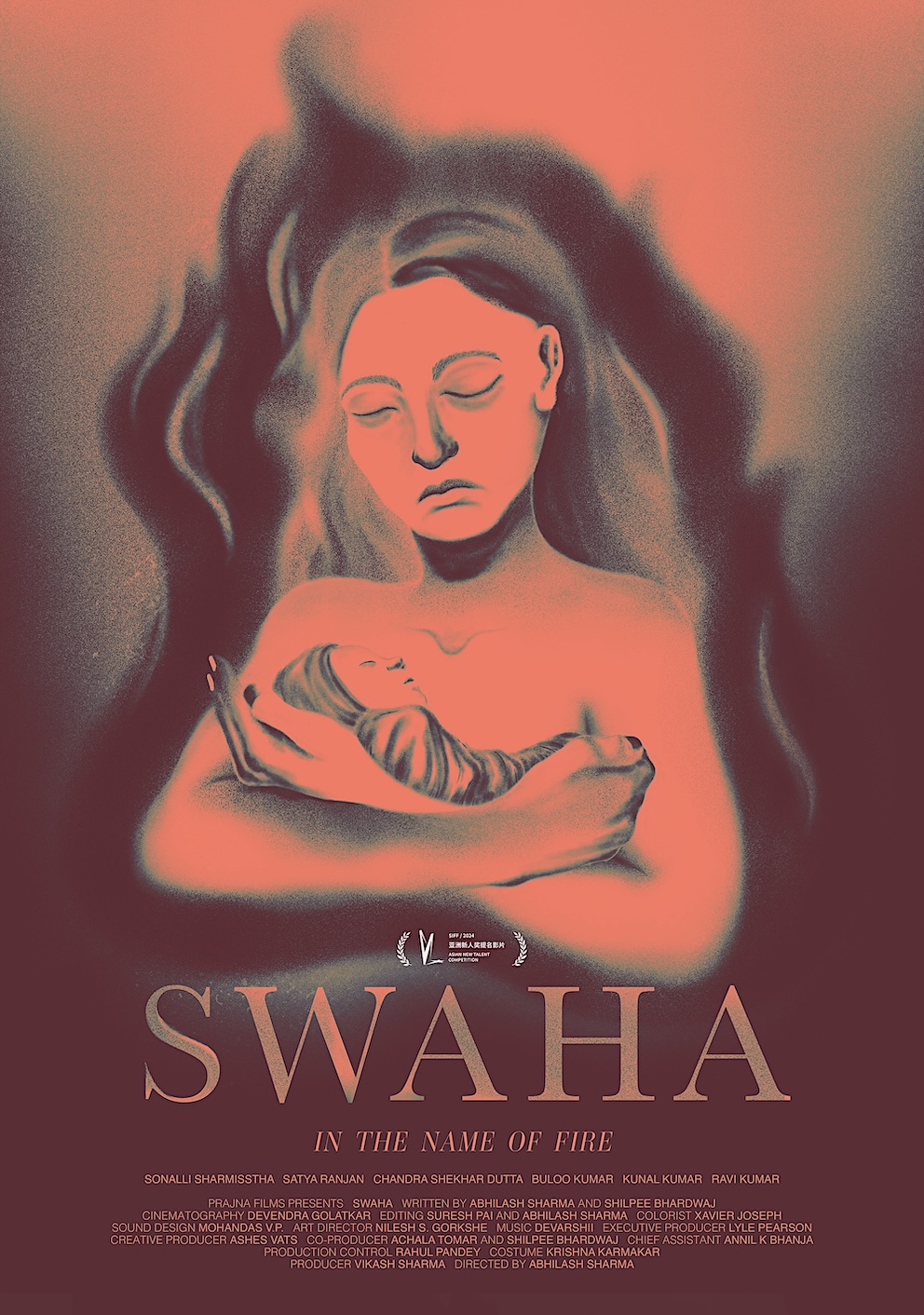
Set in rural Bihar, Swaha follows Rukhiya — a determined mother abandoned by her husband, falsely accused of being a witch, left to feed her child against every force the world can summon. Shot almost entirely in black and white, the film gives its characters a haunting, timeless quality. In the final moments, colour returns. It is a sign of hope.
Immersed in Magahi — an ancient language tracing back 2,500 years to the Buddhist era in central Bihar — the film weaves folk songs into its narrative, honouring a community whose cultural heritage faces extinction.
Prajna Films is an independent film production house based in Mumbai, founded in 2021 with a commitment to stories that carry social and emotional weight. The name Prajna — derived from Sanskrit, meaning wisdom or deep understanding — reflects our belief that meaningful cinema begins with a profound understanding of the human condition.
We are drawn to stories that exist at the margins. Communities, languages, and lives that rarely find representation on screen. Our films are not made for the mainstream. They are made for the truth.
Cinema is an archive of human experience. We make films that the audience carries home — in silence, in sleep, in thought.
We seek stories that refuse easy answers. Discomfort, when honest, is the beginning of understanding.
A film has done its work when the person who watched it is not quite the same as the person who sat down.
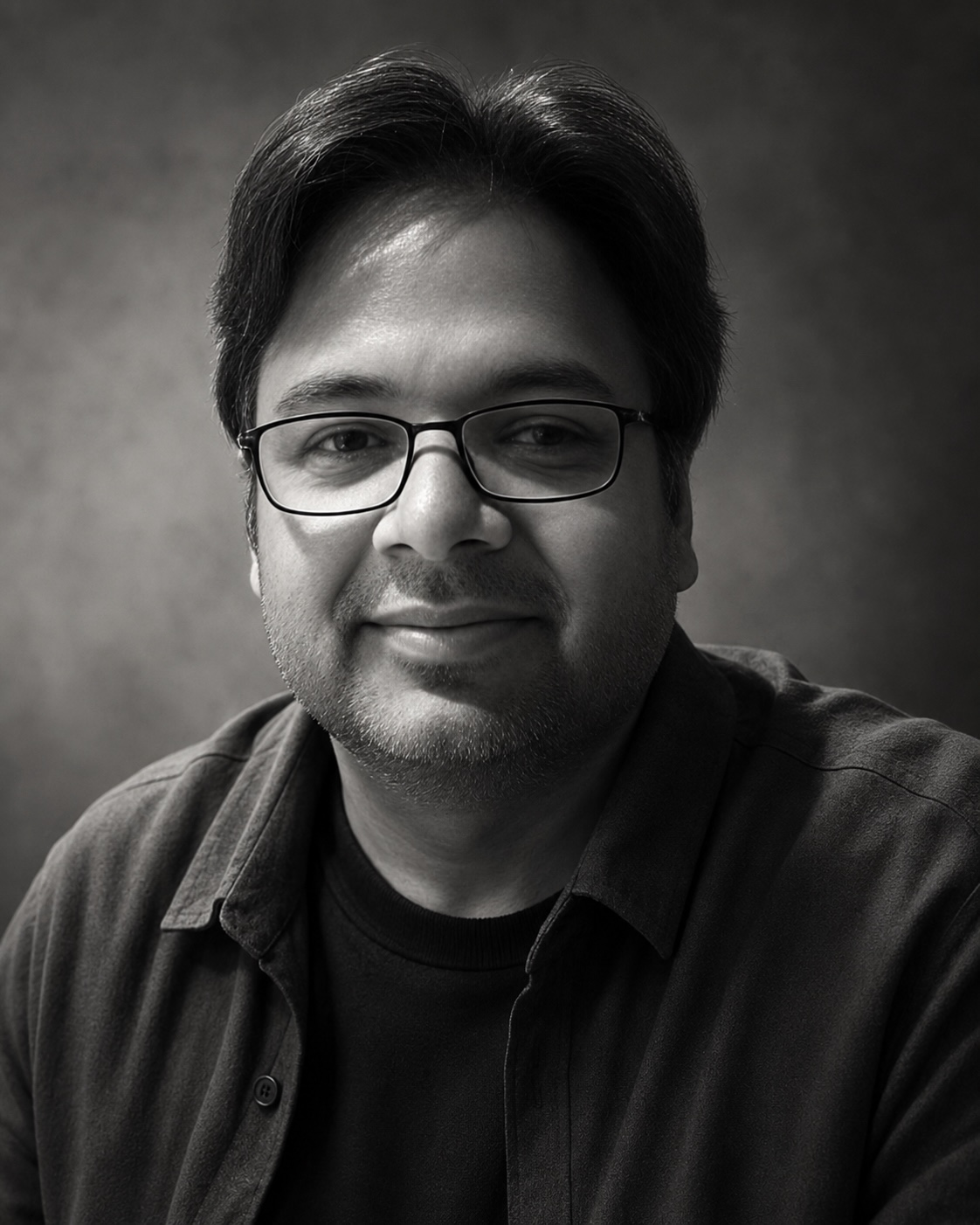
Born in the heartland of India, Abhilash Sharma spent childhood summers in the villages of Bihar — where the seeds of his most personal film were unknowingly planted. That child's fear of the Musahar community would become a filmmaker's reckoning, and eventually, Swaha.
After completing his schooling at St. Anthony High School, Dhanbad, he moved to Mumbai where he spent four formative years as an assistant director, absorbing the craft from the inside out. He debuted as a feature director in 2012 with Achal Rahe Suhaag — a modern retelling of the Savitri-Satyavan myth.
His films gravitate toward women's narratives within the socio-political landscape, shaped by Buddhism's philosophy of compassion, the cadences of his mother's Magahi, and a voracious appetite for world cinema. He is currently developing a new project set in Kolkata.
With strong roots in literature and theatre, Abhilash's cinematic voice is spare, compassionate, and unafraid of silence.
"Cinema is not merely entertainment — it is an experience of memory, silence, tension, and transformation. We seek stories that linger, that disturb, that illuminate."
Prajna Films
Stories from the edges of society carry the sharpest truths. We make films about communities, languages, and lives that are disappearing — because cinema is also an act of preservation.
Colour can seduce. Black and white demands honesty. When we strip away colour, what remains is the raw geometry of human experience — light, shadow, and truth.
Magahi, Kathi script, folk songs 2,500 years old — in our films, the language is not a vehicle for story. It is part of the story. Every word carries a world.
"A visually striking exploration of rural blight. Sharma's film has empathy for its characters and a deep understanding of the world it inhabits."
Read Review →"Sharma had to combat his own childhood fears to make this film. Swaha is an attempt to address that ignorance — and it burns with quiet conviction."
Read Article →"His mother's command of Magahi has significantly influenced his writing — lending a layer of intimacy and authenticity to his stories."
Read Feature →For press enquiries, distribution, festival screenings, ad film production, collaboration, or simply a conversation about cinema — we'd like to hear from you.
Send a Message